

Serotonin - Psychologist World
Psychologist World: Psychology articles, tests, approaches, explanations and more.

Psychology,
explained.

Click here for more information.           

  Neurotransmitters - Hypnotic World Psychology

How does Serotonin work?


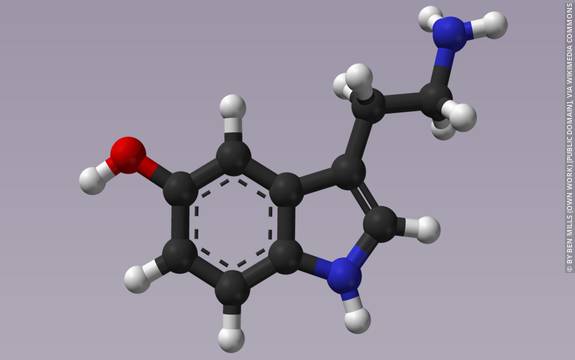
Serotonin (5-hydroxy-tryptamine, or 5-HT) is a monoamine neurotransmitter synthesized in the central nervous system.


What does it do?

Serotonin is believed to play an important part of the biochemistry of depression, bipolar disorder and anxiety. It is also believed to be influential on sexuality.


Serotonin taken orally is not passed into the serotonin pathways of the brain. Since it is such an important regulating chemical, the blood-brain barrier prevents serotonin in the blood stream from directly affecting serotonin levels in the brain. However, the amino acid tryptophan and its metabolite 5-hydroxytryptophan — which serotonin is synthesized from — are capable of crossing the blood-brain barrier. These chemicals are readily available as dietary supplements and may be effective serotonergic agents.


Other ways of working around the blood-brain barrier include a variety of psychiatric medications that affect serotonin levels indirectly, including MAO inhibitors, tricyclic antidepressants, and SSRIs. The last category includes the well known antidepressant fluoxetine (trade name: Prozac®).


The MAO inhibitors prevent the breakdown of serotonin and therefore increase concentrations of the neurotransmitter in the brain. MAO inhibitors interact harmfully with many foods (which contain amines) and drugs and have a long list of side effects.


How it works

After serotonin is released by a neuron it activates receptors located on adjacent neurons. Serotonin can be taken up again by the neuron that released it, sometimes for reuse. Some drugs inhibit this re-uptake of serotonin, again making it stay in the synapse longer. The tricyclic antidepressants inhibit the re-uptake of both serotonin and norepinephrine. The newer Selective Serotonin Re-uptake Inhibitors (SSRIs) have fewer (though still numerous) side effects and fewer interactions with other drugs.


Deficient (and sometimes, excessive) intake of various dietary minerals and vitamins can lead to disturbed levels of serotonin via disrupting either the production or reuptake processes.


Care must be taken in any attempt to increase serotonin levels, as a dangerous condition known as serotonin syndrome may result. This is especially a concern if multiple sertonergic drugs may interact.


Serotonin is found extensively in the human gut, as well as in the blood stream.


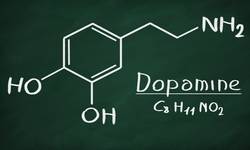
Dopamine


Source: 1

Related articles:
brain
Biological Approach
Cells
Cerebellum
ECT
Frontal Lobe


More articles in this section... | All psychology articles...


Most Read in June, 2008:
 Psychology Articles

  Are You Angry? Test

 Behavioral Psychology

 Fight-or-Flight Response

 Cognitive Approach

 More...

  Receive fascinating and informative insights
  on psychology topics with our newsletter:

Email:

Name:


 Click here for more information.


Subscribe for access to all 2,200+ pages


Browse more...

Behavioral Psychology

Biological Approach

Body Language

Cognitive Psychology

Disorders (Mental)

Dreams


Emotion

Freud

Memory

Personality

Sleep

Stress

Personality Tests

About this site...

   Home Page

   About the Site
   Contact Information
   Privacy Statement 
   Support

   Subscribe Today

© 2006-2008
Psychologist World & partners.
Parts licensed under GNU FDL.
Icons by Axialis Team.